
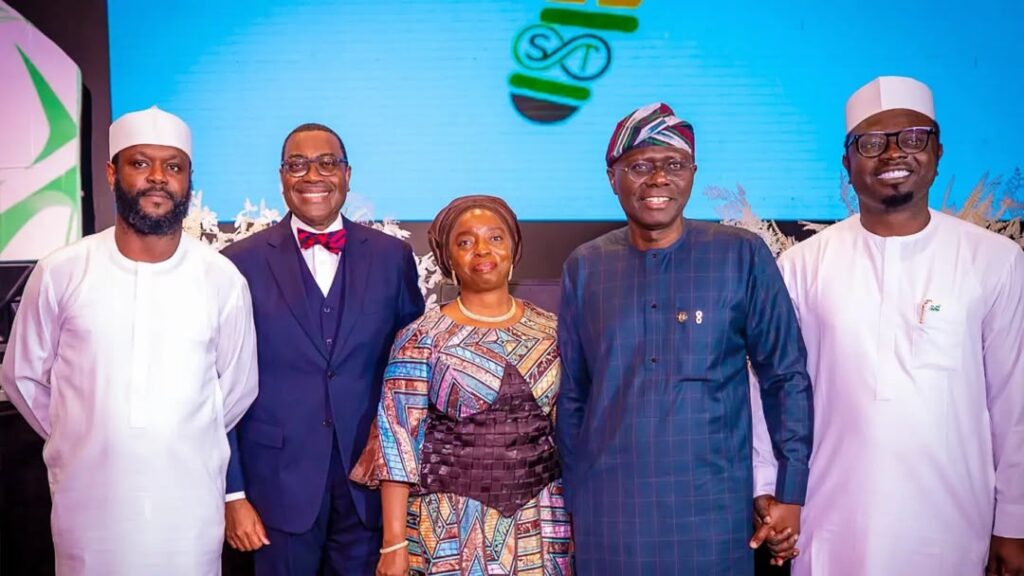
Political leaders, government officials and development experts have called for greater youth participation in governance, stronger mentorship and increased investment in education, skills and innovation as Nigeria and other African countries seek sustainable economic growth.
The call was made at the inaugural Seyi Tinubu Colloquium, themed “Shaping the Future Together,” held at Eko Convention Centre, Victoria Island, Lagos, on Monday. The gathering brought together political stakeholders, traditional rulers, business leaders and youth representatives to discuss leadership, economic reforms and the role of young people in shaping Africa’s future.
The convener, Seyi Tinubu, said meaningful youth inclusion required more than access to political leaders. He urged young Nigerians to understand public policies, ask critical questions, contribute practical ideas and prepare themselves for leadership responsibilities.
Addressing participants, Tinubu acknowledged the immediate economic pressures associated with the Federal Government’s reforms, including petrol subsidy removal, foreign exchange market changes and tax restructuring. He maintained that the measures were intended to address structural economic challenges and create conditions for long-term stability.
He encouraged young professionals to take an active interest in governance and policy development, arguing that preparation, competence and responsibility were necessary for effective leadership. He also stressed the importance of experienced leaders creating opportunities for younger generations to contribute to decision-making.
Lagos State Governor Babajide Sanwo-Olu, who attended as the special guest of honour, emphasised mentorship as a practical way of preparing young people for leadership and strengthening public institutions.
Reflecting on his own career, Sanwo-Olu recalled that he entered public service as a special adviser under then Lagos State Governor Bola Tinubu in 2001, when he was about 36 years old. He said the opportunity helped shape his professional journey and demonstrated the importance of giving younger people room to develop their abilities.
The governor urged established leaders to mentor young Nigerians, provide them with employment opportunities and allow them to take on responsibilities under appropriate supervision. He also encouraged business leaders to give young people opportunities to secure their first contracts and gain practical experience.
According to Sanwo-Olu, leadership should involve preparing others to succeed and building institutions that can continue functioning beyond the tenure of those who established them. He argued that structured mentorship and the transfer of experience were essential to maintaining institutional continuity.
Former President of the African Development Bank Group, Dr Akinwumi Adesina, delivered the keynote address titled “Africa Next: Building the Demographic Asset Class.” He challenged African governments to view the continent’s growing population not simply as a demographic statistic but as an economic resource that requires deliberate investment.
Adesina noted that Africa was projected to account for approximately a quarter of the global population by 2050. He cautioned, however, that population growth alone would not guarantee prosperity without corresponding investments in education, healthcare, technical skills and productive employment.
He called for a shift away from excessive dependence on natural resources towards developing the capabilities of the people themselves. In his address, he described investment in the human mind, which he referred to as “grey matter infrastructure,” as fundamental to innovation, productivity and economic development.
Adesina explained that while countries routinely invest in physical infrastructure such as roads, ports, railways and power networks, the skills and knowledge of their citizens are equally important to national progress.
He also urged African countries to become active developers and adaptors of emerging technologies, particularly artificial intelligence, rather than relying exclusively on solutions created elsewhere. He highlighted the potential for technology designed around African languages and local conditions to address challenges in agriculture, healthcare and other essential sectors.
The colloquium featured discussions on technology, enterprise and governance, providing a platform for participants to examine the relationship between youth development, economic opportunity and institutional reform.
Other dignitaries in attendance included the wife of the Lagos State Governor, Dr Ibijoke Sanwo-Olu; Minister of State for Youth Development, Ayodele Olawande; Speaker of the Lagos State House of Assembly, Mudashiru Obasa; and other government officials and stakeholders.
The event also attracted criticism from African Action Congress presidential candidate Omoyele Sowore, who questioned the basis for organising an elaborate colloquium in honour of Seyi Tinubu. In a post on X, Sowore asked what public service, intellectual contribution or national achievement justified the gathering and the participation of prominent figures.
His criticism introduced a contrasting perspective on the event, highlighting public debate surrounding recognition, political influence and the criteria used to celebrate individuals in national life.
Despite the differing views surrounding the colloquium, its central discussions focused on the need to equip young Nigerians with the knowledge, experience and opportunities required to contribute to national development.
The messages from Sanwo-Olu and Adesina placed particular emphasis on translating youth inclusion into practical outcomes through education, mentorship, access to employment, entrepreneurship and technological innovation.
As Nigeria continues to confront economic and social challenges, the effectiveness of such calls will depend on whether they lead to concrete opportunities for young people to participate in governance, develop marketable skills and build sustainable businesses. The broader challenge for policymakers and established leaders is to ensure that youth engagement extends beyond public discussions to meaningful participation in decisions that shape the country’s future.
You must be logged in to post a comment.