
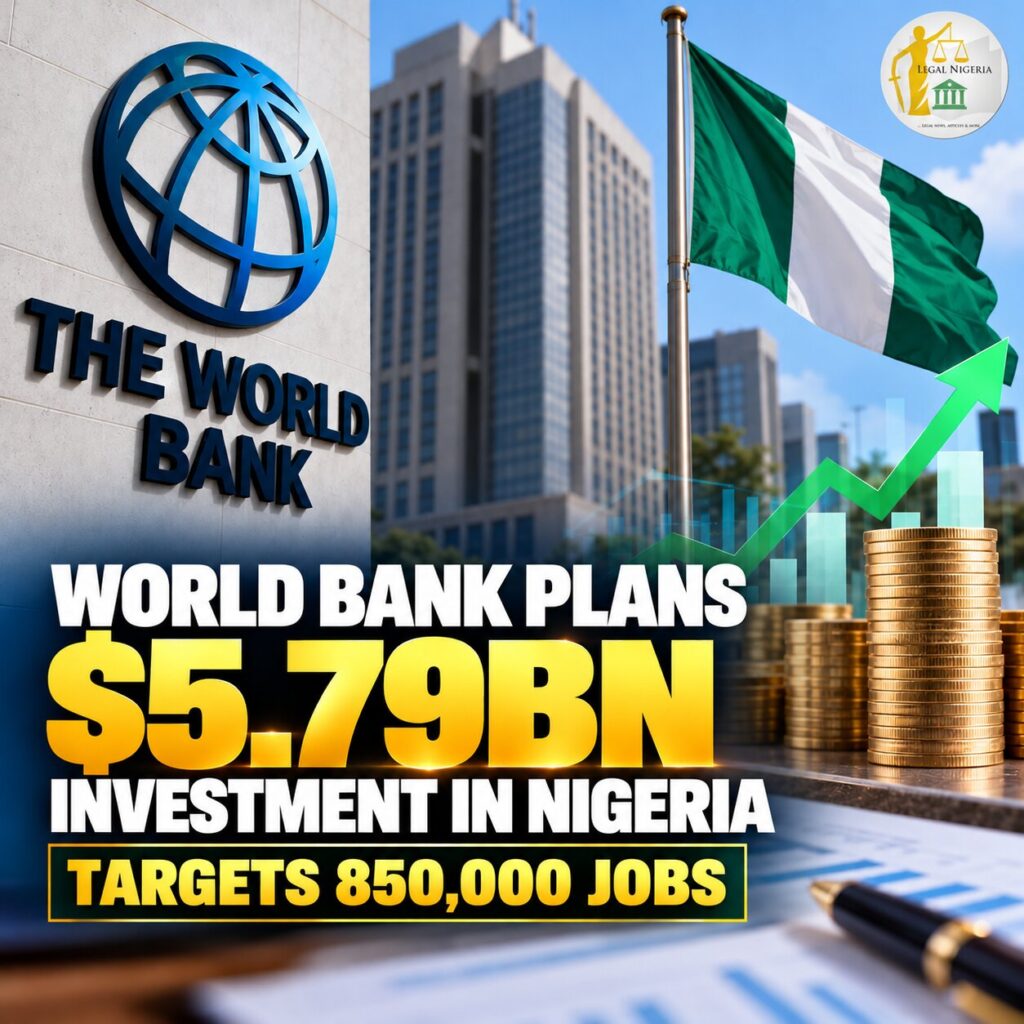
The World Bank Group has unveiled plans to mobilise up to $5.79 billion in private-sector financing for Nigeria in the 2026 fiscal year, with investments expected to strengthen critical sectors of the economy and support the creation of approximately 850,000 direct and indirect jobs.
The initiative, disclosed in a report published on Sunday, October 11, 2026, will focus on digital infrastructure, agriculture, telecommunications, financial inclusion and small business development.
According to the World Bank, the financing strategy seeks to attract private investors by combining economic reforms, development financing, investment guarantees and measures designed to reduce commercial risks.
The institution explained that Nigeria’s infrastructure deficiencies, limited access to affordable credit and challenges confronting farmers and small businesses require substantial private-sector participation to achieve sustainable economic growth.
A major component of the initiative is the Building Resilient Digital Infrastructure for Growth (BRIDGE) Project, which is expected to attract at least $156 million in private equity during its initial investor selection process.
Subsequent financing rounds could raise private investment under the project to $1.1 billion by 2030.
The project aims to extend affordable broadband services to an additional 58 million Nigerians, increasing coverage from 92 million people in 2025 to 150 million by 2030.
It also targets the connection of 38,800 public schools, 16,900 healthcare facilities and 3,400 local government offices to high-speed internet services.
In the agricultural sector, the World Bank plans to mobilise approximately $242 million through its Agricultural Value Chains for Growth (AGROW) Project, which is designed to support one million smallholder farmers.
The proposed investment comprises $220 million expected from agribusiness companies and another $22 million from certified seed producers.
The programme is intended to improve farmers’ access to quality seeds, fertilisers, digital services and markets while strengthening agricultural productivity and food security.
The World Bank also identified improved access to finance for small businesses as a major priority under the initiative.
Through the Fostering Inclusive Finance for MSMEs in Nigeria (FINCLUDE) programme, the institution expects to attract nearly $1.89 billion in private financing to support more than 250,000 micro, small and medium-sized enterprises.
The programme, backed by a $500 million financing package from the World Bank’s lending institutions, is projected to support approximately 850,000 direct and indirect jobs.
At least 30 per cent of the financing is targeted at women-led businesses, reflecting efforts to expand economic opportunities and improve financial inclusion.
The International Finance Corporation (IFC), the World Bank Group’s private-sector investment arm, is also supporting domestic fertiliser production through financing arrangements involving Dangote Industries Limited and Indorama Fertilizer.
According to the report, the IFC helped mobilise $1.02 billion for Dangote Industries and $282.5 million for Indorama.
Both projects have a combined annual production capacity of 6.8 million metric tonnes and are expected to improve access to agricultural inputs for more than 10 million smallholder farmers.
In telecommunications, the IFC supported a $1.2 billion bond issuance by IHS Towers, helping attract more than $1.1 billion from private investors.
The World Bank linked the investment drive to economic reforms introduced in Nigeria since mid-2023, including changes to foreign exchange management, fuel subsidy arrangements and public finance administration.
It noted that these reforms, alongside further measures aimed at improving capital markets, digital trade and private-sector participation in electricity, could create more favourable conditions for investment.
The institution stressed that its approach involves using public development resources to attract significantly larger amounts of private capital rather than relying exclusively on government funding.
It added that the success of the initiative would ultimately be measured by improvements in infrastructure, agricultural productivity, access to business financing and employment opportunities.
Although the $5.79 billion represents financing being mobilised rather than a single direct investment already disbursed, the World Bank expressed optimism that the combined initiatives could strengthen Nigeria’s private sector and expand economic opportunities.
Similarly, the projected 850,000 jobs are expected outcomes of the FINCLUDE programme and do not represent employment positions already created.
The initiative forms part of the World Bank Group’s broader efforts to support private-sector-led growth, strengthen economic resilience and address development challenges across Nigeria.
You must be logged in to post a comment.