
The International Monetary Fund (IMF) has raised its economic growth forecast for Nigeria in 2026 to 4.2 per cent, reflecting improved macroeconomic stability and favourable changes in the country’s terms of trade. However, the institution has warned that persistent increases in the cost of essential goods could deepen poverty and worsen food insecurity.
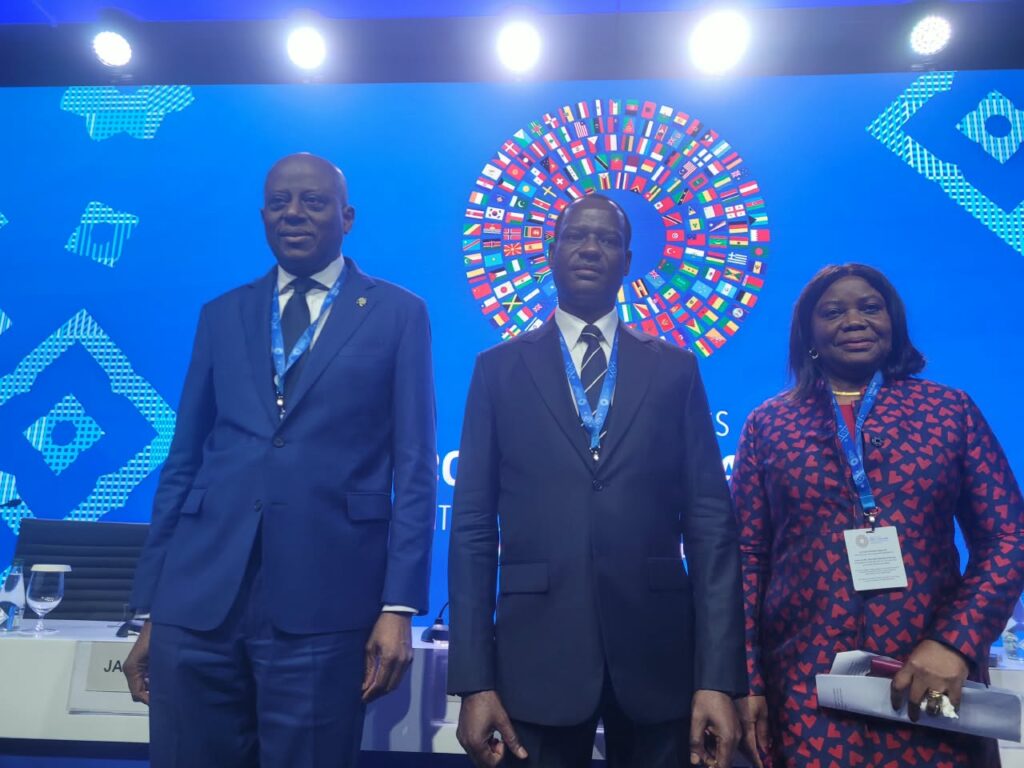
The revised projection was contained in the IMF’s October 2026 edition of the World Economic Outlook, titled Resilience Under Strain, Urgent Choices. The report was presented during the IMF and World Bank annual meetings in Bangkok, Thailand.
The new forecast represents an upward revision of 0.1 percentage point from the institution’s previous projection of 4.1 per cent. For 2027, the IMF maintained its growth forecast for Nigeria at 4.3 per cent, indicating expectations of continued economic expansion over the next year.
The Fund attributed the improved outlook partly to measures introduced to stabilise Nigeria’s economy, including foreign exchange market reforms and the removal of the petrol subsidy regime. These policy changes have been associated with efforts to improve public finances and strengthen the broader economic environment.
Despite the improved projections, the IMF cautioned that stronger economic growth does not automatically translate into better living conditions for citizens. High food prices, energy costs and other essential expenses continue to place considerable pressure on households, particularly low-income earners.
The warning highlights the gap that can exist between positive economic indicators and the everyday experiences of ordinary Nigerians. Although an expanding economy can create opportunities for investment and production, the benefits may take time to reach households through improved employment, purchasing power and access to essential services.
Nigeria’s economic outlook also remains exposed to external developments, including fluctuations in international commodity prices and disruptions affecting global trade. Higher crude oil prices could improve export earnings and government revenue, but rising fuel, transportation and food costs could offset some of those gains by increasing the cost of living.
The IMF’s assessment comes as the Federal Government continues to defend its economic reform programme, which is aimed at strengthening fiscal sustainability, improving the foreign exchange market and creating conditions for long-term growth.
However, the social consequences of the reforms remain a major concern. Rising living expenses have increased the financial burden on households and businesses, reinforcing calls for policies that protect vulnerable citizens while supporting economic productivity.
The Fund projected growth across sub-Saharan Africa at 4.5 per cent in 2026, although economic performance is expected to vary among countries. Differences in policy implementation, reliance on commodity exports, climate-related shocks and access to external financing are among the factors likely to influence growth across the region.
For Nigeria, the revised forecast offers a cautiously positive outlook, but the challenge remains converting projected growth into measurable improvements in living standards. Sustained progress will depend not only on macroeconomic stability but also on policies that expand productive employment, strengthen food supply chains and reduce the pressure of essential expenses on households.
As the country navigates its ongoing economic adjustments, the IMF’s latest assessment underscores the importance of balancing growth objectives with measures that address poverty and food insecurity. The ultimate test of Nigeria’s economic recovery will be whether its projected expansion delivers meaningful and lasting benefits to the wider population.
Editorial note: The 4.2% figure is a forecast, not a confirmed growth result. The article therefore distinguishes the IMF’s projection from Nigeria’s actual economic performance.
You must be logged in to post a comment.