
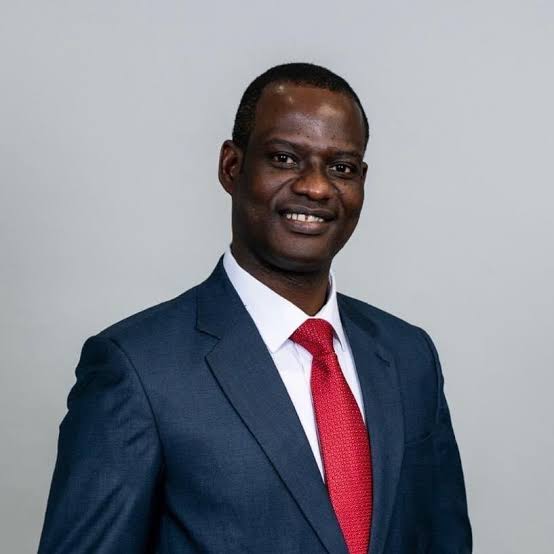
The Group of Twenty-Four (G-24), chaired by Nigeria’s Minister of Finance and Coordinating Minister of the Economy, Taiwo Oyedele, has called on the International Monetary Fund (IMF) and the World Bank to improve financing conditions for developing countries facing rising debt costs, economic uncertainty and mounting development challenges.
The call was made during the G-24’s 2026 annual meeting in Bangkok, Thailand, held alongside the ongoing annual meetings of the IMF and World Bank. Oyedele presented the group’s communiqué, highlighting the need for international financial institutions to respond more effectively to the economic pressures confronting emerging markets and developing economies.
Oyedele warned that high borrowing costs and increasing debt vulnerabilities were limiting the ability of developing countries to invest in infrastructure, create jobs and protect essential public services. He said these pressures were particularly concerning at a time when geopolitical conflicts, trade uncertainty, volatile commodity prices and climate-related shocks were threatening global economic growth.
The G-24 called for more affordable financing, including greater access to concessional loans for vulnerable countries. It also urged international development institutions to mobilise more private capital to support long-term investment and economic transformation.
According to estimates cited by Oyedele, developing countries face approximately $500 billion more in debt-servicing costs than advanced economies. The disparity, he argued, places additional pressure on national budgets and reduces the resources available for development priorities.
The group also called for reforms to the IMF’s quota system to better reflect changes in the global economy. It maintained that emerging markets and developing countries should have a stronger voice in the institution’s decision-making processes, while the interests of smaller and poorer economies should remain protected.
On debt management, the G-24 advocated faster and more coordinated restructuring processes, greater transparency among creditors and improved participation by private lenders. These measures, it said, would help countries facing debt distress reach sustainable agreements without prolonged uncertainty that could undermine economic recovery.
The group further urged the IMF to ensure that its supported programmes protect essential social spending and productive investment. Oyedele argued that fiscal adjustments should not become so severe that they weaken recovery efforts or undermine policies designed to generate employment and improve living standards.
The Nigerian minister also highlighted the need to balance macroeconomic stability with inclusive growth. He maintained that stable economic conditions were necessary for sustainable development but should be accompanied by deliberate policies that expand opportunities, strengthen productive sectors and ensure that growth benefits ordinary citizens.
The G-24’s position comes amid concerns that many developing economies are struggling to meet debt obligations while responding to rising living costs and demands for better public services. For countries with limited fiscal space, the cost of borrowing can determine how much funding remains available for healthcare, education, infrastructure and social protection.
Climate finance was another priority raised by the group. It called for fairer access to climate-related funding and urged development banks to mobilise at least $300 billion in private finance annually by 2035. The G-24 argued that developing countries require adequate resources to address climate risks without compromising their broader development goals.
The group also called for stronger international tax cooperation to curb profit-shifting, tax avoidance and illicit financial flows. Improved cooperation, it argued, could help governments protect their revenue bases and mobilise domestic resources without placing excessive pressure on vulnerable households and productive businesses.
Oyedele said rebuilding confidence in the global economic system would require multilateral institutions to respond to the needs of developing countries while respecting national sovereignty and the principles of the United Nations Charter.
The G-24 brings together developing countries to coordinate positions on international monetary and development issues, particularly in discussions involving the IMF and World Bank. As its chair, Nigeria is playing a central role in articulating the group’s concerns over debt sustainability, financing access and representation in global economic governance.
The outcome of the meeting places renewed pressure on international financial institutions to consider reforms that make development financing more accessible and responsive to the realities facing poorer economies. Whether these calls translate into lower borrowing costs, faster debt resolution and increased funding for development will depend on the response of the IMF, World Bank and their member countries.
You must be logged in to post a comment.