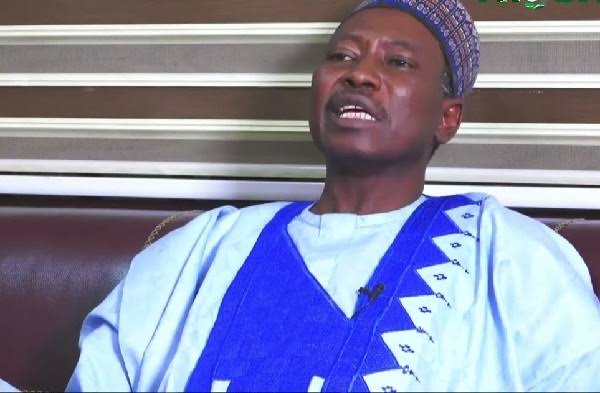
The Chairman of the Code of Conduct Tribunal (CCT), Dr Mainasara Umar Kogo, has expressed concern that many Nigerians occupying positions of authority appear unaware of their constitutional responsibilities, warning that the pursuit of personal interests continues to undermine national development.
Kogo made the remarks while discussing corruption, leadership and the challenges facing Nigeria’s public institutions. He called for stronger institutional mechanisms, improved legal frameworks and a renewed commitment to patriotism, discipline and responsible public service.
According to him, public office should be regarded as a responsibility to serve citizens rather than an opportunity for personal enrichment. He maintained that no public official was inherently more important than an ordinary Nigerian and stressed that public resources belonged to the people.
Kogo said that even the diversion of a single naira from public funds constituted a serious moral offence, emphasising the need for integrity among individuals entrusted with public responsibilities.
The CCT chairman expressed optimism about the possibility of addressing corruption in Nigeria but argued that existing institutional structures and legal frameworks needed to be strengthened. He also stressed the importance of ensuring that those responsible for adjudication and public administration demonstrated patriotism and discipline.
On the tribunal’s ability to prosecute politically exposed persons, Kogo explained that its current powers were limited by the existing legal framework. He said the Code of Conduct Bureau was responsible for investigating and prosecuting cases brought before the tribunal, while the Attorney-General also possessed constitutional prosecutorial powers.
He noted that the tribunal could not independently determine who should be prosecuted, as it was restricted to handling cases presented through the established process.
Kogo disclosed that a proposed legislative reform was intended to address these limitations by allowing anti-corruption agencies to bring relevant cases before the tribunal, regardless of the status of the individuals involved.
He also proposed transforming the Code of Conduct Tribunal into a National Anti-Corruption Court, which would have a broader mandate to handle corruption-related cases. Under the proposal, anti-graft agencies and civil society organisations would be able to prosecute relevant cases before the proposed court.
The proposal also includes establishing about seven judicial divisions and recruiting 37 additional judges to accelerate the handling of corruption cases. Kogo said he had appealed to the Attorney-General of the Federation and the President to consider adopting the bill as an executive bill to facilitate its passage by the National Assembly.
He further identified issues such as certificate forgery, falsification of records, academic plagiarism, dual citizenship and foreign bank accounts as matters that could require legal scrutiny beyond asset declaration, subject to the appropriate legal framework.
Reflecting on Nigeria’s governance challenges, Kogo expressed concern about the declining purchasing power of citizens and the difficulties many households face in meeting basic needs. He said the country’s economic circumstances had weakened the capacity of many Nigerians to afford essential necessities.
He also lamented what he described as an erosion of nationalism, national cohesion and patriotism, arguing that individual interests were increasingly taking precedence over the collective welfare of the country.
According to him, Nigeria needs more statesmen who prioritise national development and the welfare of future generations rather than focusing primarily on acquiring political power and wealth.
Kogo called on the National Orientation Agency to strengthen its role in promoting national unity, patriotism, responsible citizenship and public service.
He also discussed the challenges he encountered when he returned to the tribunal as chairman, describing an institution that had deteriorated considerably. He said the building lacked reliable electricity and water, its lifts were not functioning, security was inadequate, and essential working materials were unavailable.
Kogo said he had taken steps to restore electricity, provide water through boreholes, improve security and begin renovating the building. He also highlighted staff development initiatives, the resolution of outstanding promotions and efforts to pay retirement entitlements to former employees.
According to him, approximately 70 to 80 per cent of affected retirees had received their entitlements, with some having waited as long as two decades for payment.
He added that new allowances and welfare measures had been introduced for staff, alongside a 13th-month salary bonus intended to improve motivation.
However, Kogo said inadequate funding continued to constrain the tribunal’s operations. He disclosed that the institution received between ₦26 million and ₦28 million in overhead funding on average, with releases sometimes delayed for two or three months. He also said he had not received any capital allocation since assuming office.
To address some of the resource challenges, he said he had approached international donor agencies and other institutions, which provided computers, laptops, printers, photocopiers and other equipment.
Kogo also disclosed efforts to recover properties allegedly disposed of by previous tribunal leaderships. He said a property in Wuse II, Abuja, had been recovered following the intervention of the FCT Minister, Nyesom Wike, while another property in Bauchi that had allegedly been converted into a commercial plaza had also been recovered.
He said the tribunal was seeking funds to renovate the properties and restore them to official use.
Kogo maintained that his priority was to establish a functional institution capable of operating effectively beyond his tenure, adding that public officials should focus on fulfilling their responsibilities rather than pursuing personal recognition.
You must be logged in to post a comment.