
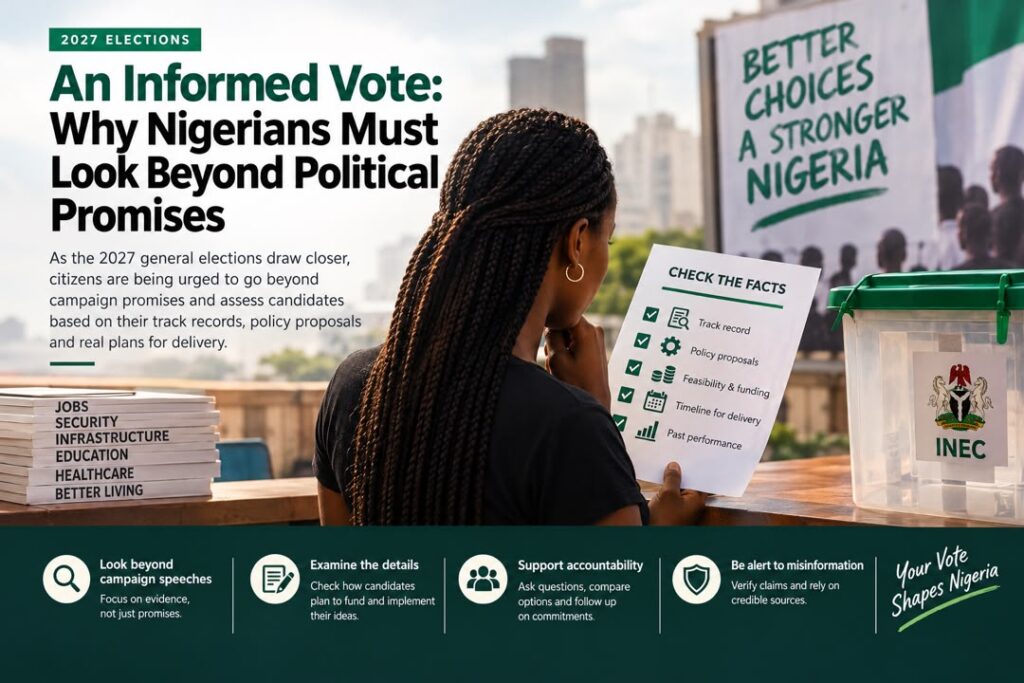
As Nigeria prepares for the 2027 general elections, citizens have been urged to look beyond political campaign promises and assess candidates based on their track records, policy proposals and ability to deliver measurable results.
The call highlights the importance of informed voting at a time when political parties and aspirants are increasingly presenting plans to address major national challenges, including unemployment, insecurity, rising living costs, inadequate infrastructure and limited access to quality education and healthcare.
Political promises often attract public support during election campaigns, but questions about their feasibility, funding and implementation remain critical. Voters are therefore encouraged to examine how candidates intend to fulfil their commitments, the resources required and the timelines for achieving their proposed objectives.
One example of efforts to monitor campaign commitments was the Buharimeter initiative established by the Centre for Democracy and Development following the 2015 general elections. The initiative tracked 222 promises made by then-President Muhammadu Buhari and the ruling party, providing a framework for assessing progress against the administration’s campaign commitments.
An early assessment, conducted during the administration’s first seven months, recorded one promise as achieved and 27 as ongoing, while 194 had not yet been rated. Although some commitments required more time to implement, the exercise demonstrated the value of documenting political promises and evaluating them against evidence.
With the 2027 elections approaching, similar scrutiny could help Nigerians make more informed decisions. Candidates seeking public office are expected to present credible plans on issues affecting everyday life, from economic growth and job creation to electricity supply, agricultural development and national security.
For instance, proposals to reduce the cost of living should explain the policies through which prices would be addressed, the expected financial implications and when citizens might begin to experience improvements. Likewise, employment promises should distinguish between temporary opportunities and sustainable jobs capable of supporting households over the long term.
Public empowerment programmes also require careful examination. Financial grants, scholarships, food distribution and business support initiatives can benefit vulnerable communities, but questions about funding, beneficiary selection and continuity remain important. Transparent procedures can help citizens determine whether such programmes are designed to deliver lasting benefits or are primarily intended to influence electoral choices.
The growing spread of misleading information presents another challenge. Voters have been encouraged to verify political claims, examine the credibility of their sources and avoid sharing unconfirmed information. This is particularly important as digitally manipulated images, audio recordings and videos become increasingly convincing.
Political parties, journalists and civil society organisations also have important roles to play in promoting accountability. Candidates should provide realistic proposals and explain how they intend to finance them, while journalists and independent organisations can monitor commitments and compare them with government budgets, policies and actual results.
As campaigns gather momentum ahead of the 2027 elections, the emphasis is increasingly shifting towards the quality of the choices available to voters. Beyond persuasive speeches and attractive manifestos, citizens need evidence that candidates understand the country’s challenges and have practical plans to address them.
An informed vote requires more than supporting a popular candidate or responding to campaign promises. It involves examining the evidence, comparing available options and demanding accountability from those seeking public office.
You must be logged in to post a comment.