
By Ibrahim Hassan-Wuyo, Elizabeth Osayande & Ifunanya Ndigwe
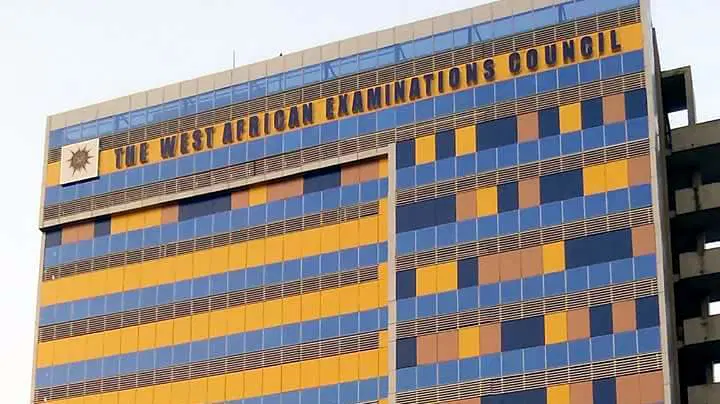
The management of the West African Examinations Council, WAEC, has taken the Non-Academic Staff Union of Educational and Associated Institutions, NASU, to the National Industrial Court to stop a planned strike over unmet staff welfare promises.
The court order followed the expiration of a 14-day ultimatum issued by the union on July 7.
Meanwhile, the Northern Youth Council of Nigeria, NYCN, and the Non-Academic Staff Union of the West African Examinations Council, NASU-WAEC Nigeria Branch, have expressed divergent views over the root causes of the lingering industrial dispute in WAEC Nigeria.
While the NYCN recently alleged that sectional bias underlies the crisis, NASU-WAEC dismissed the claim, insisting that its dispute with management is purely labour-related and has nothing to do with the ethnic or regional background of the Head of National Office, Prof. Amos Dangut.
In a statement issued by its National President, Isah Abubakar, on Wednesday, the NYCN said its position was based on a petition submitted two years ago by a concerned Northerner, alleging that the prolonged conflict between WAEC management and NASU-WAEC’s Nigeria Branch was rooted in sectional prejudice.
According to Abubakar, the petitioner claimed the current Chief Executive Officer was being unfairly targeted because he is a northerner leading an organisation largely populated by staff from the South-West.
He stated that the council reviewed the petition, independently monitored developments surrounding the dispute, examined the role of NASU-WAEC headquarters, and studied the correspondence exchanged between the union and WAEC management.
Abubakar added that the council also assessed the validity of the union’s demands, compared current administrative practices with those of previous Chief Executive Officers, and reviewed recruitment, appointment and deployment patterns in WAEC, including allegations of non-compliance with the Federal Character Principle outlined in Section 14(3) of the 1999 Constitution.
According to him, the council observed allegations of disproportionate representation in favour of some geopolitical zones, which it said had fuelled perceptions of marginalisation.
He alleged that recruitment exercises conducted between 2020 and 2024 reflected disparities, claiming the South-West accounted for 273 national staff recruits, compared with 195 combined across the three northern geopolitical zones, and that the South-West and South-South together received 437 of the 726 national staff recruited during the period.
Abubakar also alleged that all 16 international staff recruited into the Registrar cadre in 2023 came from southern states, while none came from the three northern geopolitical zones.
He further claimed that the leadership of WAEC Nigeria had historically been dominated by one geopolitical zone, alleging the South-West occupied the headship of the organisation for 32 of its 56 years, while the three northern geopolitical zones held the position only once, for three years.
The NYCN urged relevant authorities to ensure fairness, equity and balanced representation in WAEC’s recruitment, appointments and administration, while calling for a comprehensive audit of recruitment, appointments, promotions and deployments, publication of Federal Character compliance records, a review of deployment policies, and the establishment of a transparent monitoring mechanism.
Union rejects ethnic narrative
However, the Chairman of NASU-WAEC Nigeria Branch, Comrade Kayode Ogunyade, in an exclusive chat with our correspondent rejected attempts to ethnicise the dispute, insisting the conflict is strictly labour-related
“It is rather unfortunate that all of these are happening, and some individuals have decided to ethnicise the issues,” Ogunyade said.
Giving the genesis of the fracas, the union revealed trouble started after the nationwide strike in December 2024 over the new minimum wage, where the union asked for a thirty per cent pay raise.
According to the union, the council leaders ignored the shared agreement and went ahead to get board approval for twenty-five percent instead, which later caused a four-day strike before an extra two percent was added to the twenty-five percent pay rise.
The union alleged that as soon as the strike was called off, management started punishing union members unfairly and weakened internal checks.
He noted that management banned the Senior Staff Association by forcing its members to quit, stopping the automatic collection of monthly union fees, and changing the rules of disciplinary panels to put workers at a disadvantage.
The union reiterated that despite several calls for improved staff welfare, WAEC management has refused to heed the call, a move that necessitated the recent protest a few months ago.
They added that the travails of staff in the last WASSCE that allegedly caused the death of some staff, among other complaints, also involved a need for strike action.
Their words: “Immediately Council got wind of our plan. They got an emergency court order to halt the planned strike action. We decided to obey the court decision as a law-abiding group while waiting for further directions from its national leaders.
“As I speak to you now, we are in court because management had finally taken the union to court. As of yesterday, we were supposed to start another strike action, an indefinite strike action. We have given them a 14-day ultimatum on the 7th of July, which elapsed yesterday. But because they knew they were not going to budge on our demands, they quickly ran to the Industrial Court and got an ex-parte order to stop us from going on strike. But being a law-abiding citizen and body, we stayed back, and we are working.”
Addressing claims that the disagreement was caused by tribal issues between Northern and Southern staff, the union denied the rumours, stating that the union’s fight covers all regional offices across the country.
The union pointed out that the last employment exercise held by the council actually gave more jobs to people from the northern part of the country, but stressed that the union is only fighting for open processes, fairness, and worker welfare rather than tribal interests.
“Prior to December 2024, we had a smooth relationship with the management, but after that time, I just discovered that it was an attack. Under this administration, more people than the previous three administrations have been dismissed unjustly, and more people have been punished unjustly. This narrative of it being Northerners versus Southerners is false because if you have done well, the issue would not even arise. The essence of the union is to check the management, and if we are not going to serve as a check on management, then there is no point having a union,” Fashina added.
WAEC declines comment
When contacted, a top senior staff member of WAEC who craved anonymity stated that the body can not comment on the allegations as the case is currently in court.
“I don’t have any comments at this moment. I am not authorised to speak on this matter because it is in court.”
Source: Vanguard News
You must be logged in to post a comment.