
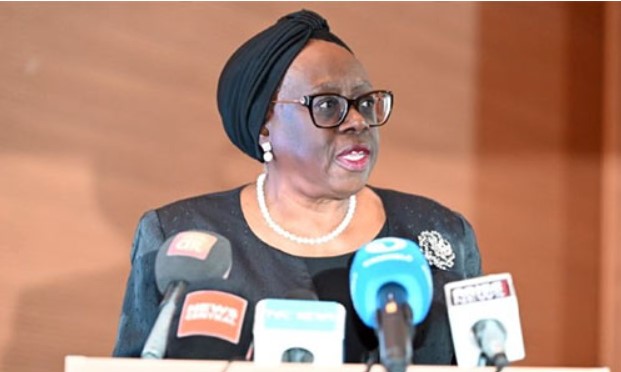
The Chief Justice of Nigeria (CJN), Justice Kudirat Kekere-Ekun, has cautioned magistrates and other lower court judges against rushing to deliver judgments at the expense of fairness, patience and the rights of litigants.
She stressed that judges must balance speedy justice delivery with proper consideration of cases, warning that the pressure to clear court dockets should not result in hasty decisions.
The CJN gave the warning on Monday, November 16, 2026, at the opening of the 2026 All Nigeria Judges’ Conference of the Lower Courts, organised by the National Judicial Institute (NJI) in Abuja.
The conference was held under the theme, “Enhancing Effective Justice Delivery Through Innovation and Institutional Efficiency.”
Kekere-Ekun said lower courts occupied a critical position in the country’s judicial system because they handled disputes that directly affected the daily lives of ordinary Nigerians, including family matters, inheritance, land disputes, commercial transactions and criminal cases.
She noted that many Nigerians had their first, and sometimes only, experience of the judiciary at the magistrates’, Sharia, area and customary courts.
According to her, the manner in which judicial officers conduct proceedings and treat litigants often shapes public perception of the entire judiciary.
The CJN identified delays in court proceedings as one of the persistent challenges confronting the justice system, noting that repeated adjournments and prolonged litigation impose financial and emotional burdens on ordinary citizens.
She, however, warned that efforts to address delays must not compromise the quality of judicial decisions or deny parties the opportunity to present their cases.
Kekere-Ekun acknowledged that inadequate facilities, insufficient manpower and limited resources contributed to delays in the administration of justice. She urged judicial officers to address issues within their control through discipline, effective case management and proper courtroom administration.
Judges must treat litigants with dignity
The CJN also reminded lower court judges to treat lawyers, witnesses, litigants and other court users with dignity, irrespective of their educational or financial circumstances.
She said judicial authority should be exercised with patience, restraint and respect, adding that judges could maintain order in their courtrooms without humiliating anyone.
Kekere-Ekun emphasised that an unrepresented or financially disadvantaged litigant deserved the same courtesy and fairness as every other person appearing before the court.
She warned that the credibility of the judiciary depended not only on the legal correctness of its decisions but also on whether people felt they had been heard and treated fairly.
CJN advocates technology in justice delivery
On the use of technology, Kekere-Ekun urged lower court judges to embrace digital innovations to improve efficiency, reduce delays and make judicial processes more accessible.
She identified digital case management systems, electronic filing and electronic records as tools that could strengthen court administration.
However, she cautioned that technology adoption must be supported by adequate training, reliable infrastructure, technical assistance and safeguards for confidential information.
She also warned against allowing people without access to digital facilities to be excluded from the justice system.
The CJN further acknowledged the potential of artificial intelligence to support legal research, document summarisation and administrative functions, but urged judicial officers to exercise caution in its application.
NJI administrator cautions against misuse of technology
Also speaking, the Administrator of the National Judicial Institute, Justice Babatunde Adejumo, urged lower court judges to maintain ethical standards while adopting technological innovations.
He warned that innovation without proper control and discipline could create risks and undermine the integrity of judicial administration.
Adejumo said the institute had strengthened its capacity-building programmes for lower court judges in line with its responsibility to provide judicial education for all categories of judicial officers.
He described the biennial conference as an important platform for recognising the contributions of lower court judges, whose work remains essential to the administration of justice and the rule of law at the grassroots.
You must be logged in to post a comment.