
By Luminous Jannamike
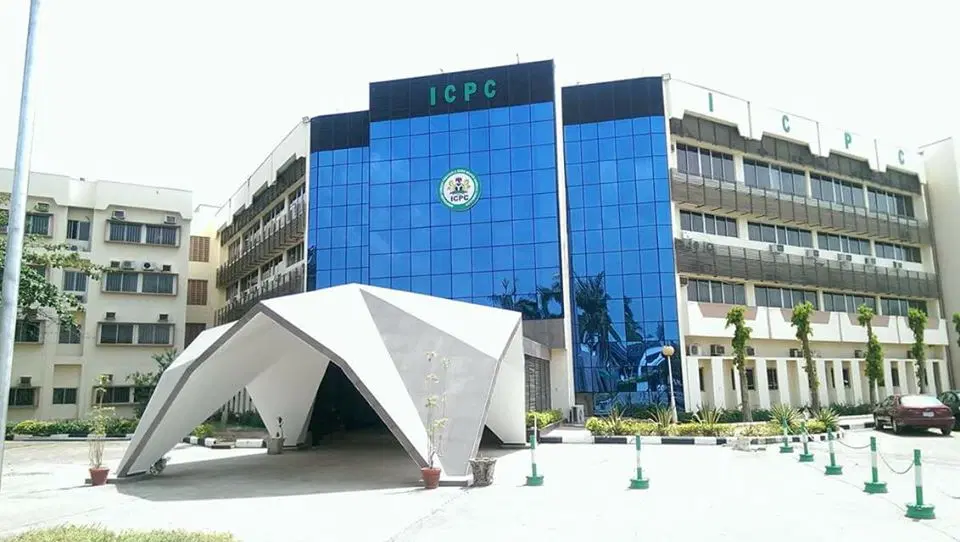
ABUJA — The Independent Corrupt Practices and Other Related Offences Commission, ICPC, on Tuesday pushed for the introduction of anti-corruption studies into Nigeria’s legal education system, declaring that the real issue was no longer whether such teaching was necessary, but how it should be implemented across universities and the Nigerian Law School.
The Commission warned that corruption continues to weaken institutions, erode public confidence and undermine the rule of law, stressing that arrests and prosecutions alone would not be enough to tackle the problem without deliberate efforts to instil ethical values and accountability in future lawyers and public officers.
Chairman of the ICPC, Musa Adamu Aliyu, SAN, stated this in Abuja during the ICPC/Nigerian Law School Workshop for Deans of Faculties of Law on the Teaching of Anti-Corruption in Nigerian Universities and the Nigerian Law School, themed, ‘Institutionalising Anti-Corruption Education in Nigeria’s Legal Training.’
Aliyu said: “The critical issue before us, therefore, is not whether anti-corruption education is necessary, but how best it should be delivered.
“Should it be infused across existing law courses to ensure ethical consciousness across all areas of legal study? Should it be incorporated into broader general studies programmes? Or should it be introduced as a distinct and standalone course to provide the depth, focus, and visibility it deserves?”
The workshop brought together law deans, legal scholars and stakeholders in the justice sector to discuss practical ways of building accountability and transparency into legal training at both university and professional levels.
Aliyu said lawyers occupy a sensitive position within the justice system and play a major role in shaping public trust in governance and state institutions.
According to him, integrity and accountability must be instilled early in the training of lawyers to produce professionals who are not only intellectually competent, but also guided by strong ethical standards.
“Combating corruption cannot be limited to investigation and prosecution alone,” he said.
“It must also involve preventive, educational, and value-driven approaches capable of shaping attitudes, strengthening ethical consciousness, and promoting a culture of integrity, transparency, and accountability.”
The ICPC chairman said the engagement was designed to help the Commission, universities and the Nigerian Law School jointly develop a workable framework for introducing anti-corruption education into the country’s legal training system.
Discussions at the workshop focused on the possible inclusion of anti-corruption studies in the LL.B curriculum under the Core Curriculum and Minimum Academic Standards, CCMAS, teaching methods, lecturer training, and stronger collaboration between the Commission and legal education institutions.
He said, “Our role as a Commission is to support, facilitate, and provide the necessary institutional backing for whatever framework may ultimately be adopted.
“This initiative is conceived as a pilot intervention with the potential for wider application across other professional disciplines in the future.
“The outcome of this workshop will therefore not only shape legal education in Nigeria, but may also influence the broader landscape of professional ethics and integrity training within our national institutions.”
He further reminded participants that the ICPC’s mandate under the Corrupt Practices and Other Related Offences Act, 2000, extends beyond investigation and prosecution to prevention and public education.
“The decisions and recommendations arising from this workshop have the potential to shape generations of legal practitioners and strengthen the integrity and credibility of our justice system,” he said.
Source: Vanguard News
You must be logged in to post a comment.