
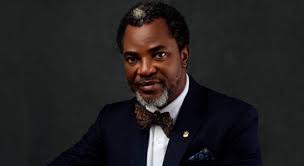
A growing outcry has emerged over the excessive use of long, siren-blaring convoys by political office holders and security chiefs in Nigeria, as Mr. Adesina Adegbite warns that the trend poses serious risks to public safety, economic prudence, and democratic values. In a critical commentary, the legal practitioner condemned the culture of overblown motorcades as a symbol of impunity and misplaced priorities, arguing that beyond the display of power, these convoys disrupt daily life, endanger citizens, and deepen the disconnect between leaders and the people they are meant to serve.
The Peril of Obscene Long Convoys by Political Office Holders and VIPs in Nigeria
In Nigeria, the sight and sound of long, blaring convoys accompanying political office holders, Security Chiefs and VIPs has become very familiar and unsettling. These motorcades, often consisting of dozens of vehicles, armed escorts, and aggressive sirens are intended to display power, ensure security, and command authority. Yet, beyond the spectacle lies a growing concern; the dangers, the oppressive tendencies and societal costs of these often excessive convoys.
At the heart of the issue is a culture of impunity and overrated relevance. Many political office holders and VIPs maintain convoys far larger than what is reasonably required for security. Instead of modest, intelligence-driven protection, most highly placed Nigerians maintain large obscene convoys simply as a symbol of status. The result is a troubling normalization of excess, where public officials appear more like untouchable elites than servants of the people.
One of the most immediate dangers posed by these convoys is the risk to public safety. Nigerian roads are already fraught with challenges of poor infrastructure, erratic driving, and inadequate traffic management. When convoys barrel through traffic at high speeds, forcing other road users aside, the likelihood of accidents increases significantly. Countless reports have documented incidents where innocent pedestrians, commuters, or motorists were injured or killed simply because they were in the path of a rushing convoy. These tragedies are often avoidable, yet they persist.
Beyond physical danger, these convoys disrupt daily life. Major roads are frequently blocked or cleared abruptly to make way for a passing official. Workers are delayed, businesses interrupted, and emergency situations exacerbated. Imagine an ambulance being forced to exit the road or slow down in traffic because a reckless convoy chose to dominate the road. Such scenarios highlight a painful irony: those entrusted with public welfare and safety by their proclivity for showmanship endanger those in critical need of protection.
There is also a psychological and symbolic impact. Long convoys reinforce a visible divide between leaders and citizens. In a democratic society, elected officials are meant to be accessible and accountable. However, the aggressive nature of these convoys, complete with sirens, armed personnel, and forced right-of-way creates an atmosphere of intimidation rather than service. It sends a message that the comfort and urgency of a few outweigh the rights and dignity of the unprotected majority.
Economically, the maintenance of these convoys is another burden. Fuel costs, vehicle procurement, maintenance, and personnel allowances are all funded by public resources. In a country grappling with economic challenges, such expenditure raises serious questions about priorities. Funds that could be directed toward healthcare, education, welfare of staff or infrastructure are instead consumed by the logistics of maintaining an inflated sense of security and prestige.
Security, of course, is a legitimate concern. Nigeria faces complex threats, and political office holders can be targets. However, effective security is not synonymous with visibility of personnel or volume. In many cases, smaller, smarter, and less conspicuous security arrangements are not only safer but also more efficient. Overly large convoys can even become liabilities, drawing attention and creating predictable patterns that adversaries could exploit. Political office holders need to become more considerate and responsible in the manner they maintain long convoys and this can be achieved through deliberate policies by the Federal and State Government that will be uncompromisingly enforced.
Another common menace on Nigerian roads is the unregulated use of sirens by all manner of persons, especially the self-acclaimed VIPs. In Nigeria today, everyone that has little money is now a VIP. They abuse the use of sirens in a manner that offends the sensibilities of other motorists, and they often drive recklessly, putting the lives of other road users at risk. Despite a recent presidential directive that policemen attached to VIPs should be withdrawn, we still see on a daily basis police officers following persons of questionable means of livelihood around as escorts. Most Nigerian celebrities now validate their special status by the number of police officers attached to them as either security guards or escorts. This is a seriously disturbing and dangerous trend. Something drastic must be done to stop this uncivilized practice amongst the privileged and oppressive few.
It is even more worrisome when heads of government agencies that often claim to lack adequate funding will maintain a convoy long enough to rival that of a Governor. It is simply irresponsible! The convoys of the heads of security agencies, especially the Inspector General of Police and Service Chiefs are better imagined. Recently the ridiculous convoy of the Commandant of the Federal Fire Service went viral. It’s not limited to the Fire Service, the heads of Federal Road Safety Corps, Nigeria Security and Civil Defense Corps, Nigeria Customs Service and many more are also complicit in maintaining such embarrassing long convoys.
Addressing this issue requires both policy reform and cultural change. Clear guidelines should be established regarding the size and conduct of official convoys, with strict enforcement mechanisms. Traffic laws must apply equally to all, regardless of status. Additionally, there must be a shift in mindset among political leaders. The political leaders must recognize that true leadership is demonstrated through humility, responsibility, integrity and respect for the public.
Public awareness and advocacy also play a role. Citizens, civil society organizations, and the media must continue to highlight the dangers and demand accountability. When the conversation shifts from admiration of power displays to criticism of their consequences, change becomes more likely.
In conclusion, the persistence of long, obscene convoys among Nigeria’s political office holders, security chiefs and VIPs is more than a mere inconvenience, it is a multifaceted problem that endangers lives, wastes resources, and undermines democratic values. Reducing their prevalence is not just a matter of efficiency, but of justice, safety, and national dignity. An immediate action must be taken by the Federal Government to address and arrest this unpleasant practice immediately.
Adesina Adegbite, FICMC, MCIArb
Secretary General, West African Bar Association (WABA); and Immediate Past General Secretary, Nigerian Bar Association (NBA)
You must be logged in to post a comment.