
By Innocent Anaba
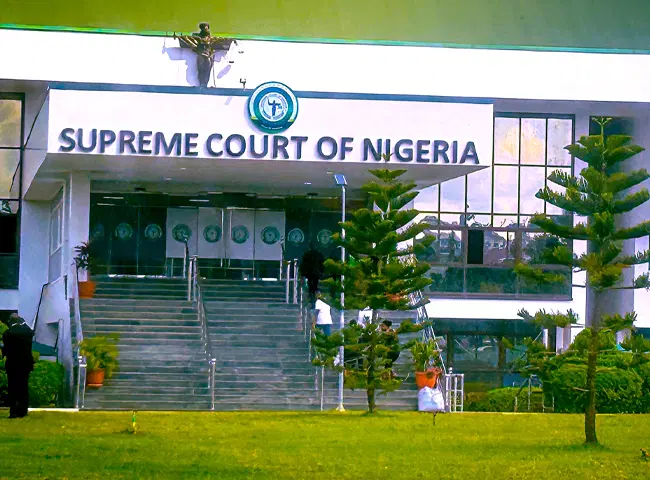
The Supreme Court on Friday restored Wole Olanipekun, SAN and Dr. Muiz Banire, SAN, as counsel for Neconde Energy Limited and Nestoil Limited in the ongoing $2 billion debt dispute, setting aside the earlier decision of the Court of Appeal which disqualified them.
In a unanimous judgment delivered by Justice Mohammed Idris, the apex court affirmed the right of the companies to retain legal practitioners of their choice, particularly in proceedings challenging the validity of a receivership imposed on them.
The court held that where the legality of a receiver’s appointment is being contested, such a receiver lacks the authority to appoint counsel to represent the company in the same matter.
The ruling effectively reinstates Olanipekun’s appearance for Neconde Energy Limited and Banire’s representation of Nestoil Limited in the high-stakes dispute involving a consortium of lenders led by FBNQuest Merchant Bank Limited and FBN Trustees Limited.
At the centre of the dispute is whether a receiver appointed by lenders can exclusively determine the legal representation of a company, even when the validity of that appointment is under judicial challenge.
The Supreme Court answered in the negative.
Justice Idris noted that the issues submitted before the trial court sought interpretation on whether the lenders were entitled to enforce security, appoint a receiver, and whether such a receiver could lawfully exercise powers under the appointment.
According to the court, these issues strike at the “very foundation” of the receivership, rather than constituting routine administrative matters.
“It would occasion a conflict of interest,” the court held, “for a receiver appointed by parties whose rights are being challenged to also determine the legal representation of the company in the same proceedings.”
The apex court stressed that the receiver’s powers are derived from the very transaction being disputed, making it improper for such a receiver to control the company’s legal defence.
It further held that proceedings questioning the validity and scope of a receivership do not fall within the general powers granted to a receiver under Section 556(3) of the Companies and Allied Matters Act (CAMA) and its Eleventh Schedule.
In such circumstances, the court said that a company retains residual powers to defend itself through its board of directors and counsel of its choosing.
“The defence of the action through its directors and the counsel retained by them cannot be said to be incompetent merely because a receiver has been appointed,” Justice Idris declared.
The Supreme Court faulted the January 13, 2026, decision of the Court of Appeal, which had disqualified Olanipekun, Banire, and their legal teams, while recognising the receiver as the sole authority to appoint counsel.
Describing the decision as erroneous, the apex court held that the lower court failed to appreciate the inherent conflict in allowing a receiver—whose appointment is under scrutiny—to control the company’s legal representation.
The case, marked SC/CV/48/2026, stems from an alleged $2 billion indebtedness owed by Nestoil Limited and Neconde Energy Limited to a consortium of lenders.
Following the alleged default, the lenders appointed a Receiver/Manager to take over the companies’ assets and operations.
The judgment is expected to have far-reaching implications for corporate governance and creditor enforcement, particularly in insolvency and receivership proceedings, as it reinforces the rights of companies to independent legal representation when challenging the validity of such appointments.
Source: Vanguard News