
The legal profession in Nigeria prides itself on being a community governed by rules, ethics, and a deep respect for democratic processes. It is therefore deeply troubling that, in the build-up to the forthcoming Nigerian Bar Association elections, some political actors have chosen a path that undermines the very principles the profession claims to uphold.
A recent order of the High Court of Oyo State sitting in Ibadan has restrained the NBA and the Electoral Committee of the Nigerian Bar Association (ECNBA) from taking steps in furtherance of the conduct of the 2026 NBA National Officers’ election. The order was made on a motion ex parte, meaning the court heard only one side of the dispute before granting the far-reaching interim injunction.
To be clear, courts possess the jurisdiction to grant interim orders where circumstances demand urgency. However, such orders are expected to be exercised with caution, particularly where the relief sought has the potential to disrupt an entire institutional process affecting thousands of members across the country.
In this case, the order restrains members of the ECNBA from acting or participating in any process connected to the 2026 NBA elections pending the hearing of an interlocutory injunction. The implications of such an order are profound. The NBA is not a small private club. It is a national professional body comprising tens of thousands of lawyers spread across the federation. Any attempt to halt its electoral process inevitably affects the collective rights of its members to participate in the governance of their association.
What raises legitimate concern is not merely the existence of litigation. Litigation is a legitimate tool for resolving disputes. The troubling issue is the manner in which this litigation was deployed.
First, the order was obtained ex parte without giving the other parties an opportunity to be heard before such sweeping relief was granted. In matters affecting the democratic processes of institutions, the better practice is often to place the other side on notice so that the court can hear both perspectives before making orders capable of altering the status quo. Resorting to ex parte proceedings to secure an order that effectively interferes with an entire electoral process inevitably creates the impression that the court is being used tactically rather than judiciously.
Second, the choice of forum raises questions that cannot be ignored. The Nigerian Bar Association is headquartered in Abuja. Its national secretariat operates in the Federal Capital Territory. The key defendants named in the originating summons, including the Incorporated Trustees of the NBA, the President of the NBA, the Body of Benchers, and the Attorney-General of the Federation, are all connected to Abuja.
Yet the action was instituted in Ibadan.
While courts across the federation possess jurisdiction in certain circumstances, the decision to institute an action far from the operational headquarters of the institution in question inevitably invites scrutiny. When litigants bypass obvious jurisdictions and rush to distant courts to obtain ex parte orders capable of halting national processes, it raises the uncomfortable spectre of forum shopping.
But perhaps the most disappointing aspect of this entire episode is the identity of some of the actors behind the litigation. It is particularly sad to observe that senior members of the profession, individuals who over the years have stood on platforms across the country preaching ethical conduct, professional responsibility, and fidelity to the rule of law, are now at the forefront of a process that appears designed to frustrate a democratic contest within the Bar.
The legal profession expects its leaders to model restraint, integrity, and respect for institutional processes. When senior lawyers, who should ordinarily serve as moral compasses for younger members of the Bar, become associated with actions that appear to weaponise the courts for political advantage, it sends a troubling signal about the direction of leadership within the profession.
The NBA elections are designed to be competitive. They are meant to be a contest of ideas, leadership capacity, and vision for the profession. Those who aspire to lead the Bar should be prepared to test their popularity before the electorate of lawyers across Nigeria. Elections are not meant to be won in courtrooms through procedural manoeuvres before a single vote is cast.
When aspirants or their political allies begin to weaponise litigation as a pre-emptive strategy to derail the electoral process itself, it signals something deeper than a legal disagreement. It signals a lack of faith in the democratic process and a reluctance to submit to the judgment of colleagues at the ballot.
There is a difference between seeking judicial interpretation of constitutional provisions and attempting to paralyse an entire electoral system because of political anxieties. The former strengthens institutional governance; the latter undermines it.
The NBA occupies a unique place in the defence of democracy and the rule of law in Nigeria. Its members routinely speak against the abuse of judicial processes in political contests across the country. It would therefore be ironic, if not tragic, for members of the same profession to now deploy similar tactics within their own association.
Lawyers understand the immense power of interim injunctions. They know that such orders, even when temporary, can disrupt processes, create uncertainty, and shift political momentum. That is precisely why the legal profession has always emphasised restraint and responsibility in invoking the judicial process.
The NBA must not become a theatre where elections are determined by litigation strategy rather than the will of its members.
Those who genuinely believe they have the support of the Bar should welcome a transparent election, not attempt to stall it. Leadership of the Bar should be earned through persuasion and credibility, not secured through procedural ambush.
Ultimately, the courts should never become tools in the hands of political actors seeking to frustrate democratic competition. The legal profession must hold itself to a higher standard.
If lawyers cannot trust their own electoral processes to run their course, then the moral authority with which they challenge democratic abuses in the wider society begins to ring hollow.
The NBA deserves leaders who embody the ethical values the profession professes to defend. It deserves leaders who will protect the integrity of the institution, not sacrifice it on the altar of personal ambition. The future of the Bar must be shaped by individuals who respect its processes, uphold its principles, and are prepared to win the confidence of members through fair and open democratic contest. Anything less diminishes the dignity of the profession we all claim to serve.
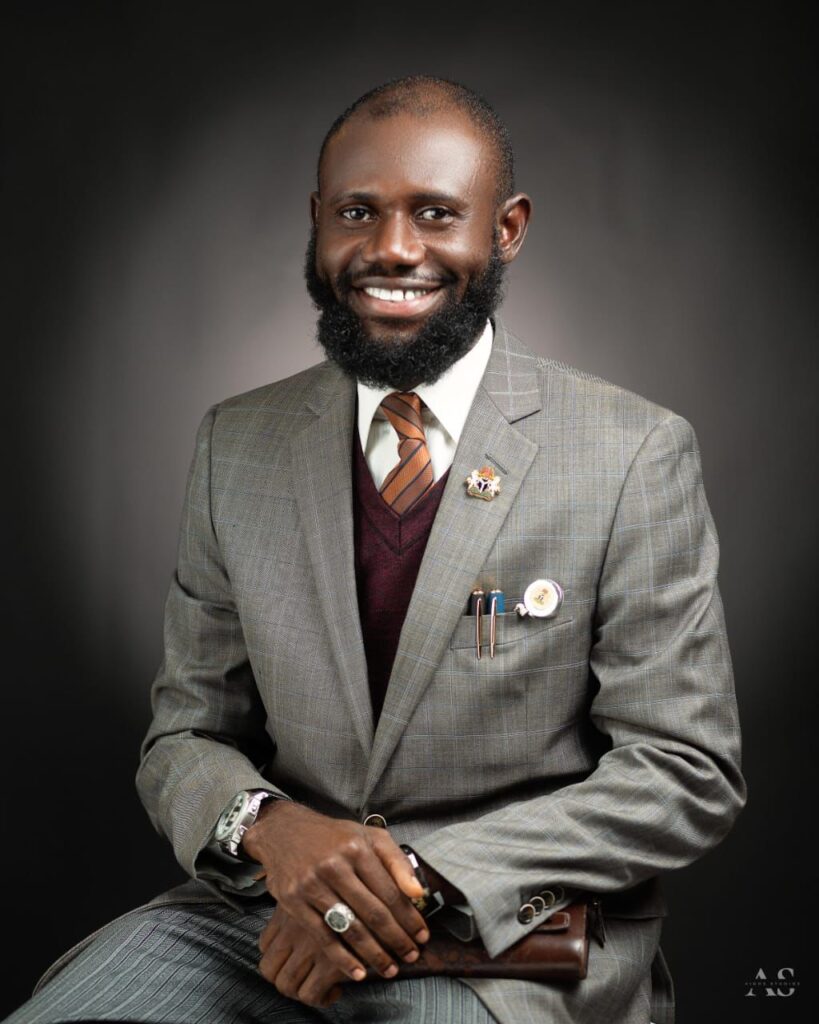
Uthman Isa Tochukwu,
Abuja based Legal Practitioner