By Gift Chapi Odekina
Media professionals have raised fresh concerns over the escalating threats confronting journalism in Nigeria, warning that unchecked misinformation, unregulated online content, and the absence of legal protection for journalists pose growing risks to the nation’s democracy.
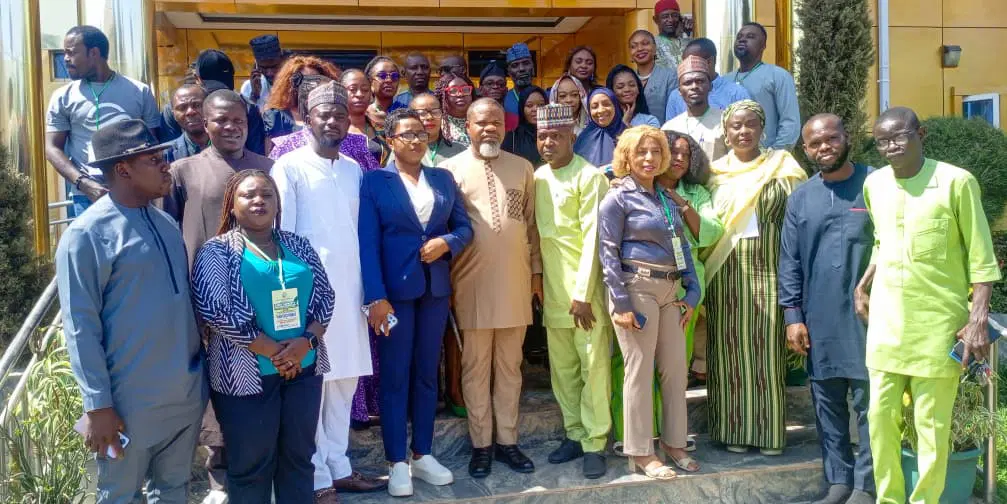
Speaking at the 2025 Capacity Building Programme for Information Officers in Keffi, former President of the Nigeria Union of Journalists (NUJ), Chris Isiguzo, said the rapid expansion of digital tools and social media has enabled non-professionals to dominate the information space—often with misleading or harmful content.
“We must confront this challenge head-on, otherwise we are going to be in trouble,” he said. “These tools are now available to young people who can use them for anything. Professionals must invade the space—social media or whatever you call it—to displace those who currently roam freely. Social media influencers and content creators are churning out all sorts of content, and professionals must be there to control the narrative.”
Isiguzo warned that what he described as the “fifth law of misinformation” is generating chaos and confusion, worsened by the proliferation of citizen journalists who operate without editorial checks or ethical standards.
“Whatever you publish must reflect professional fundamentals so that anyone reading it can recognize it as the work of a trained journalist,” he said.
He lamented the absence of legal protection for journalists in Nigeria, contrasting the situation with countries like Ghana, Malawi, and the United States, where media freedoms are firmly protected by law.
“There is no piece of legislation that protects the practice of journalism in Nigeria,” he said. “If the oxygen of democracy is plugged out and it begins to inhale carbon dioxide, that becomes toxic—for the system, for governance, and for society.”
According to him, journalists bear the constitutional responsibility of ensuring accountability yet continue to operate under fear of harassment, arrest, intimidation, or detention.
“These journalists are living in fear—fear of the unknown, fear of how to feed their families, fear for their safety,” he said. “Only a clear legal framework can protect them.”
NUJ FCT Chair Emphasizes Professional Development
In her keynote address, Chairman of the NUJ FCT Council, Comrade Grace Ike, said the capacity-building programme reflects the Union’s commitment to strengthening professionalism in Nigeria’s communication ecosystem.
“Today represents another bold step in our commitment to sharpening our skills and preparing practitioners for the realities of modern communication,” she said.
She noted that the theme of the programme—‘Enhancing Image Making, Public Relations, Social Media Management, and Media Visibility in the Public Sector’—is timely, given the speed at which information now spreads and the rising influence of digital platforms.
“We live in an age where information travels faster than policy, where perception often precedes reality, and where a single headline, a tweet, or a video clip can redefine an institution’s reputation,” Ike said.
She stressed that the role of information officers has expanded beyond issuing press statements to include strategy, crisis communication, digital engagement, content creation, and reputation management.
“To excel today, training is no longer optional—it is foundational,” she said. “It is the difference between being reactive and being strategic.”
Ike emphasized that continuous learning remains essential to staying relevant in the evolving media environment.
“When we invest in training, we invest in excellence. When we invest in knowledge, we elevate the credibility of our institutions,” she added.
She encouraged participants from the Ministry of Information, NCC, the military, NACED and various media organisations to fully engage with the training.
“Ask questions, challenge assumptions, interact with facilitators, and take back knowledge that can transform your work,” she said. “Let today mark a renewed commitment to professionalism.”
Ike expressed optimism that the programme would equip participants with tools to combat misinformation, enhance public communication, and strengthen Nigeria’s democratic space.
The capacity-building programme forms part of the NUJ’s broader initiative to improve ethical standards, strengthen government communication, and ensure journalists and information officers remain effective defenders of the public interest amid rising misinformation threats.
Source; Vanguard News