
The courtroom is often described as a temple of justice: solemn, orderly, and governed by rules that protect both authority and fairness.
At the centre of that space sits the judge, vested with immense powers to control proceedings, interpret the law, and ensure that justice is not only done but seen to be done. But what happens when that authority appears to overstep its bounds?
The powers of judges on the bench are fundamental to the administration of justice and the preservation of the rule of law.
It is well established that judges exercise significant procedural and discretionary authority in the courtroom.
They control proceedings, rule on the admissibility of evidence and submissions by counsel, and ensure that trials are conducted in an orderly and impartial manner.
In doing so, they safeguard the rights of all parties: the plaintiffs, defendants, and the public, by enforcing due process and preventing any abuse of the legal system.
Their authority to issue orders, grant remedies, and impose sanctions underscores their role as arbiters who maintain balance and fairness within the justice system.
However, what is far less common, and far more controversial, is for a judge to descend from this high pedestal, step into the arena, and attempt to mete out corporal or degrading punishment on a member of the Bar for perceived misconduct.
The issue
About two Mondays ago, a judge of the Federal High Court, Abuja, Justice Mohammed Umar, reportedly threatened to commit a lawyer, Marshall Abubakar, defence counsel to online publisher of Sahara Reporters, Omoyele Sowore, for contempt over alleged rudeness in court.
Abubakar was said to have raised his voice while arguing a defamation case against his client, Sowore, who is being prosecuted by the Department of State Services (DSS) for allegedly making false claims against President Bola Tinubu, referring to him as “a criminal” in posts on his X (formerly Twitter) and Facebook accounts.
When asked by the judge when he intended to open his client’s defence, Abubakar reportedly stated that the defence would file a no-case submission and suggested an adjournment to July.
Prosecuting counsel, Akinlolu Kehinde (SAN), objected, arguing that the defence’s approach was a tactic to delay proceedings. He instead urged the court to adopt a day-to-day hearing schedule.
In his intervention, the judge noted that while the prosecution had been swift, the defence spent four days cross-examining the prosecution’s sole witness.
He subsequently fixed April 13 for the adoption of final written addresses on the no-case submission.
Abubakar, however, expressed discomfort with the date and reiterated his preference for a July adjournment.
Reports indicate that while Sowore was addressing the court from the witness box on how the proposed date might affect his party’s primaries, his lawyer simultaneously addressed the judge, allegedly raising his voice.
“This court belongs to all of us. This court is not for some people alone. It belongs to all of us,” Abubakar reportedly said.
Attempts by the judge to caution him were unsuccessful.
At that point, Justice Umar was reported to have said: “If you shout in this court again, I will commit you for contempt. In fact, come here! Come and kneel down here!”
It took the intervention of Kehinde and other lawyers present in court, who pleaded for leniency, to de-escalate the situation.
The Inibehe Effiong case
For some lawyers, however, such incidents are not merely hypothetical.
On July 28, 2022, the Chief Judge of Akwa Ibom State, Justice Ekaette Francesca Fabian-Obot, sentenced lawyer Inibehe Effiong to one month’s imprisonment for contempt of court, citing alleged “insolence and dishonourable conduct.”
The order arose from a libel suit filed by then-Governor Udom Emmanuel against Leo Ekpenyong.
Effiong, who served as defence counsel, had asked the judge to recuse herself on grounds of alleged bias.
Counsel to the governor, Samuel Ikpo, accused Effiong of unruly conduct, alleging that he made profane remarks and disobeyed court directives, including an order to remove his wig and step aside from the Bar.
“I believe that when he comes out of the correctional facility, he would have learnt how to conduct himself before a court,” Ikpo said at the time.
Effiong, however, disputed the claims, describing himself as a victim of an unjust exercise of judicial power. In a statement posted on his social media handle, he said he felt unsafe after armed policemen were invited into the courtroom and the media asked to leave before proceedings continued.
In a viral video released shortly before his detention, Effiong explained that he had raised concerns about the presence of armed officers in court and requested their removal, a request he said was ignored before he was summarily sentenced.
He eventually served the term and regained his freedom.
Types of contempt
There are broadly two types of contempt of court: contempt in facie curiae (in the face of the court) and contempt ex facie curiae (outside the court).
Contempt in facie curiae arises from conduct or statements made during proceedings that are considered disrespectful or disruptive.
It directly undermines the authority and dignity of the court and may be punished summarily, although the alleged contemnor must first be given an opportunity to show cause.
Contempt ex facie curiae, on the other hand, occurs outside the courtroom, often involving disobedience of court orders.
This form of contempt requires strict procedural compliance, including adherence to Section 72 of the Sheriffs and Civil Process Act and the Judgment Enforcement Rules.
Powers of judges on contempt
The power of judges to punish for contempt, whether in facie or ex facie curiae, is inherent in the courts and essential for maintaining order and authority.
The Rules of Professional Conduct (RPC) reinforce this framework. Section 31(1) mandates that lawyers treat the court with respect, dignity, and honour, while Section 35 requires courtesy and decorum in all appearances before judicial tribunals.
Punishment for contempt
Where a lawyer is found to have acted disrespectfully or in disregard of the judicial process, the court may cite the lawyer for contempt. This may include ordering the lawyer to step aside from the Bar and, in appropriate cases, imposing fines or imprisonment.
All forms of contempt share a common feature: they obstruct or interfere with the administration of justice.
NBA decries directive to kneel
The Nigerian Bar Association (NBA) condemned the reported directive for a lawyer to kneel in court, describing it as inconsistent with judicial standards and the dignity of the legal profession.
NBA President Afam Osigwe, in a statement, expressed concern that the incident raised serious questions about courtroom conduct and adherence to due process.
“The courtroom is a temple of justice, governed by law, procedure, and decorum,” the statement read, stressing that judicial authority must be exercised within established legal limits.
While acknowledging that judges are empowered to maintain order, the NBA emphasised that such powers are not absolute.
“A judge directing a legal practitioner, or indeed any person, to kneel in court is not a recognised judicial sanction under our laws and does not align with expected standards of judicial conduct,” the association stated.
It added that contempt proceedings must follow clearly defined procedures to ensure fairness and respect for the dignity of all parties.
Need for caution
Late jurist and former Chief Judge of Edo State, Justice Michael Edokpayi, in a paper titled “Is It Contempt of Court or Abuse of Judicial Power?” warned against the misuse of contempt powers.
He argued that not every act that annoys a judge amounts to contempt.
“The question that must be asked is: does the act diminish the dignity of the court?” he said, stressing the need to distinguish between irritation and genuine obstruction of justice.
He cautioned that the power to punish for contempt must not be used to assuage personal feelings, noting that counsel has a constitutional right of audience and discretion in how to present a case.
Lawyers’ reactions
Legal practitioners have also weighed in on the controversy.
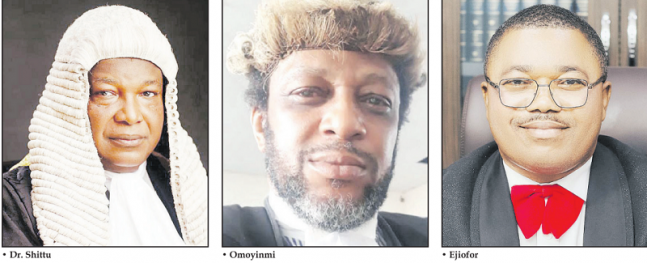
Senior Advocate of Nigeria, Dr. Wahab Shittu, described the incident involving Justice Umar and Marshall Abubakar as deeply troubling and reflective of a broader concern within the justice system.
He said: “The courtroom is not merely a room where disputes are resolved; it is the most visible institutional expression of the rule of law.
“When what happens inside departs from law, procedure, and dignity, it sends a dangerous signal that authority is personal rather than institutional.”
He was unequivocal: “Ordering a lawyer to kneel is not a recognised judicial sanction under Nigerian law.”
Shittu emphasised that contempt proceedings are governed by procedural safeguards designed to protect the liberty and dignity of individuals, warning that bypassing these safeguards amounts to an abuse of judicial authority.
He called for stronger oversight by the National Judicial Council (NJC), more proactive engagement by the NBA, and improved judicial training on courtroom temperament and emotional intelligence.
Action condemnable
Abayomi Omoyinmi, a former Commissioner in the Ogun State Judiciary Staff Commission, also described the directive as condemnable.
He noted that while lawyers are expected to conduct themselves with decorum, ordering a lawyer to kneel in open court is inappropriate and inconsistent with legal standards.
He said: “A lawyer, as an officer of the court, must act in a manner that does not obstruct or delay justice.
“However, even where there is misconduct, such an order is not the appropriate judicial response.”
Citing the words of the late Lord Denning, he stressed that judges must remain principled, just, and beyond reproach.
Urgent call to action
A senior lawyer, Sir Ifeanyi Ejiofor, called for mutual respect between the Bar and the Bench.
He said: “If left unchecked, it threatens a systemic erosion of public confidence in the legal system, a consequence far more damaging than individual acts of misconduct.
“The legitimacy of the law ultimately rests on trust, and once that trust is compromised, the very foundation of civil society is endangered.
“It is therefore imperative, indeed urgent, that the custodians of the profession rise to this challenge.
“The NBA, the Body of Benchers, the Legal Practitioners Disciplinary Committee, and the Council of Legal Education must take decisive steps to restore ethical standards, reinforce discipline, and uphold merit in the training, admission, and regulation of legal practitioners.
“The time has come to move beyond rhetoric to meaningful reform, to recalibrate entry standards, enforce discipline without fear or favour, and revive the culture of excellence that once defined the Nigerian Bar.
“If the current decline is allowed to persist, history will render a harsh verdict that a noble profession, once the conscience of the nation and a bastion of justice, was diminished through complacency and neglect. Yet, redemption remains within reach.
“What is required is courage, the courage to confront uncomfortable truths, to enforce standards impartially, and to insist that the legal profession in Nigeria must not merely exist, but must earn and sustain its revered place in society.”
Mutual respect, shared responsibility
To strengthen the Bar-Bench relation, experts recommend the following:
- Strengthen NJC oversight: Ensure timely, transparent, and consistent disciplinary action against judicial misconduct.
- Proactive NBA engagement: Move beyond statements by filing petitions, monitoring cases, and ensuring accountability.
- Regular Bar–Bench dialogues: Organise joint conferences and forums to address concerns and build trust.
- Judicial training: Emphasise courtroom temperament, emotional intelligence, and limits of judicial authority.
- Respect procedural safeguards: Strict adherence to due process, especially in contempt proceedings.
•Promote mutual respect: Reinforce professionalism, courtesy, and decorum on both sides.
- Clear communication in court: Encourage calm, structured exchanges to avoid escalation.
- Accountability for lawyers: Enforce ethical standards to curb misconduct from the Bar.
- Institutional, not personal authority: Uphold the rule of law over individual discretion.
- Continuous legal education: Regular training for both judges and lawyers on evolving standards and ethics.
Ultimately, the relationship between the Bar and the Bench rests on mutual respect and a shared commitment to justice.
For judicial watchers, both institutions are two sides of the same coin, bound by a common duty to uphold the integrity of the legal system.
Where that balance is threatened, whether by judicial overreach or professional misconduct, the consequences extend beyond the individuals involved to the very credibility of the justice system.
Source: The Nation News