
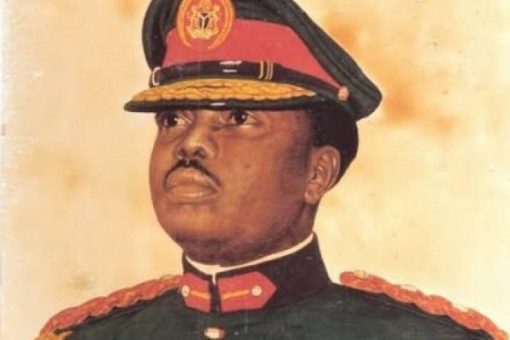
Fifty years after the assassination of General Murtala Ramat Muhammed, Nigerians and commentators are revisiting the legacy of one of the nation’s most dynamic and controversial military leaders. Muhammed, who briefly served as Head of State in the mid-1970s, is remembered for his bold reforms, towering personality and lasting influence on the country’s governance and political culture.
Murtala came to national prominence as a military officer during a period of intense political upheaval. He was part of efforts that reshaped Nigeria’s leadership cadres in the years following independence, and his reputation for decisiveness brought him to the forefront of the 1975 coup that ended the government of General Yakubu Gowon. Despite his short tenure of roughly 200 days, many Nigerians recall him for sweeping changes to the civil service, efforts to eliminate corruption, and plans to relocate the federal capital — all aimed at revitalising the country’s institutions.
On February 13, 1976, General Muhammed was assassinated in Lagos during a coup attempt led by Lieutenant Colonel Bukar Suka Dimka — a violent turn of events that cut short an ambitious leadership agenda and plunged the nation into mourning. His death at age 37 shocked the country and abruptly halted reforms he had set in motion.
In reflections published to mark the half-century milestone, many note that Murtala’s blend of “striking resolve and simplicity” made him both admired and polarising. He was seen as a leader who eschewed the pomp of office, often moving among ordinary Nigerians without the extensive protections that typically guard national leaders — a trait that, in hindsight, exposed him to mortal danger.
Historians and analysts writing on the anniversary have also discussed the complexity of his legacy. While his reforms earned him admiration for confronting administrative inefficiency, others have pointed to the abruptness and lack of detailed planning in some of his policies, which had long-term impacts on segments of public service.
Today, the memory of General Murtala Ramat Muhammed continues to feature in debates about leadership in Nigeria. His portrait remains on the ₦20 note, and the Murtala Muhammed International Airport in Lagos bears his name — enduring symbols of a leader whose short period in power left a deep imprint on the nation’s history.