
A RESPONSE IN DEFENCE OF NUANCE: WOMEN LEADERSHIP AND THE NBA
“The reflections by Mojirayo Ogunlana on the occasion of the recent celebration of International Women’s Day deserve commendation for raising a subject that remains important in every modern profession, the question of women’s participation in leadership. Conversations about representation are healthy for institutions, particularly for a profession such as the legal profession that constantly advocates equality, justice, and fairness within society.
However, while the article raises a legitimate concern, it also illustrates the danger of approaching complex institutional questions through a single, simplified lens.
The central argument appears to rest on the proposition that because only one woman, Priscilla Kuye has served as President of the Nigerian Bar Association (NBA), the institution itself must therefore be reluctant to allow female leadership. This conclusion, though rhetorically appealing, does not sufficiently account for the broader institutional reality of how leadership within the Bar actually emerges.
The NBA presidency is not a ceremonial appointment made by a small council of elders. It is the product of a highly competitive electoral process involving thousands of lawyers across numerous branches of the Association. Elections within the Bar are influenced by a multiplicity of factors, regional dynamics, professional alliances, ideological leanings, campaign organisation, and the ability of candidates to build broad coalitions across the federation. To attribute electoral outcomes primarily to gender therefore risks overlooking the complex democratic processes that shape those outcomes.
More importantly, measuring the Bar’s commitment to women’s leadership solely by reference to the presidency presents an incomplete institutional picture. Leadership within the NBA is widely distributed across Sections, Committees, Branches, and National Offices. In many of these spaces, women have served and continue to serve with remarkable distinction. Their influence within the profession is neither symbolic nor marginal.
It is therefore somewhat misleading to portray the history of women within the NBA as one of persistent exclusion. The reality is far more nuanced: women have increasingly occupied positions of influence within the Bar, even if the presidency has not yet been held by another woman since the tenure of Dame Kuye.
The article also draws attention to the historical circumstance under which Dame Kuye assumed office following the appointment of Clement Akpamgbo as Attorney-General of the Federation. While historically correct, the tone in which this fact is presented inadvertently risks diminishing the significance of her presidency. Institutional leadership often arises within particular historical moments, and the fact that circumstances created the opportunity for her emergence does not detract from the confidence the Bar reposed in her leadership.
History is replete with leaders whose rise was shaped by circumstance; yet their legitimacy is never judged by the circumstances alone.
Another difficulty in the argument is the suggestion that women have not been given the “final go-ahead” to lead the Bar. In a democratic professional association, there is no identifiable authority vested with the power to grant such permission. Leadership is neither handed down nor withheld by an invisible gatekeeper. It is secured through persuasion, organisation, participation, and the ability to command the confidence of the electorate.
To suggest otherwise risks unintentionally portraying members of the Bar, male and female alike as participants in a system of deliberate exclusion, a proposition for which little concrete evidence has been offered.
None of this is to deny that representation matters. Visibility in leadership can inspire younger members of the profession and reinforce the principle that opportunity is open to all. Yet representation is strongest when it emerges organically through the democratic processes of the institution rather than being framed as an overdue concession.
It is also important that the conversation does not inadvertently reduce accomplished women in the profession to the rhetoric of “it is time to give it to a woman.” Such a formulation, though perhaps well-intentioned, risks diminishing the very achievements of the many competent women at the Bar whose qualifications, experience and leadership capacity stand firmly on their own merit. The women of the profession have long demonstrated that they do not require leadership to be “given” to them; their competence and professional standing are more than sufficient to earn the confidence of the electorate.
The Nigerian legal profession has, over the years, produced women of extraordinary competence and influence in advocacy, academia, public service, and professional leadership. Their achievements have already reshaped the landscape of the profession in ways that statistics about a single office can not fully capture.
It is therefore important that discussions about gender representation within the Bar proceed with a sense of proportion. Institutions evolve gradually, often in ways that are less dramatic than public commentary might desire but nonetheless significant in their cumulative impact.
The aspiration to see another female President of the Nigerian Bar Association is entirely legitimate. Many within the profession would welcome such a development and would consider it a positive milestone for the Bar. But the path toward that outcome will most likely be shaped not by rhetorical framing of institutional reluctance but by the same democratic processes that have historically produced leadership within the Association.
When that moment eventually arrives, and there is every reason to believe it will, it will not simply be a symbolic correction of history. It will represent the convergence of credibility, professional trust, and the democratic will of the membership of the Bar.
Such an outcome would not only honour the pioneering legacy of Priscilla Dame Kuye; it would also affirm the enduring strength of the institutional processes through which the Nigerian Bar Association continues to choose its leaders.
In the end, the true measure of an institution committed to fairness is not merely the rhetoric surrounding equality but the integrity of the processes through which leadership emerges. On that score, the conversation about women and leadership in the NBA deserves not only passion but also patience, context, and careful reasoning.”
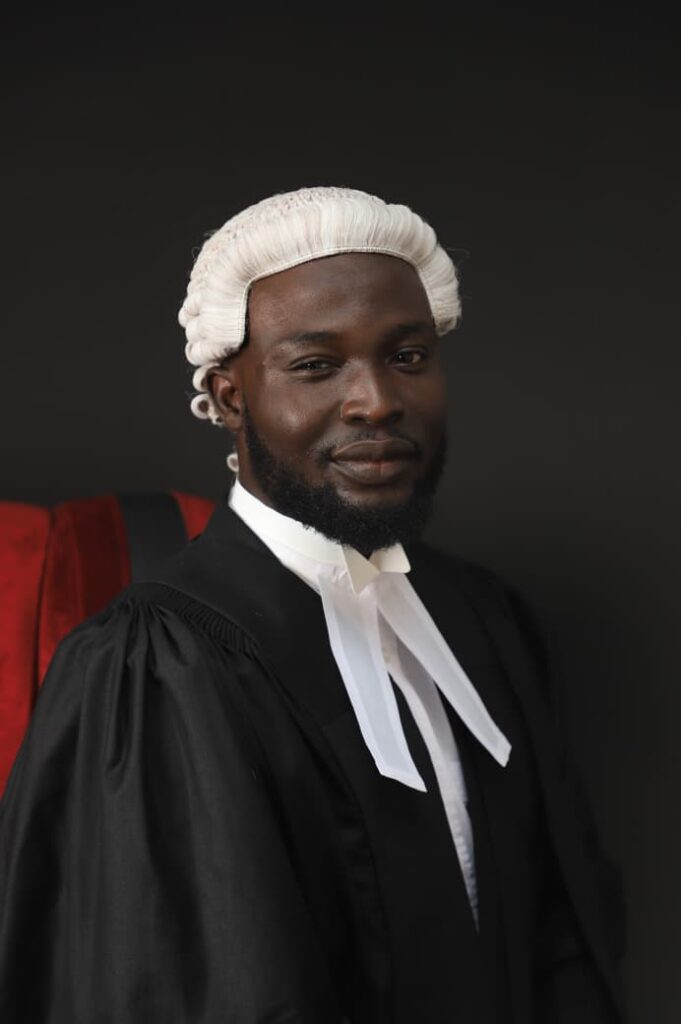
Effiwatt Michael, Esq.